|
|
The British expeditionary force or BEF was the title given to the forces of the British army dispatched from Great Britain to fight in France and Belgium in the opening months of the First World War.
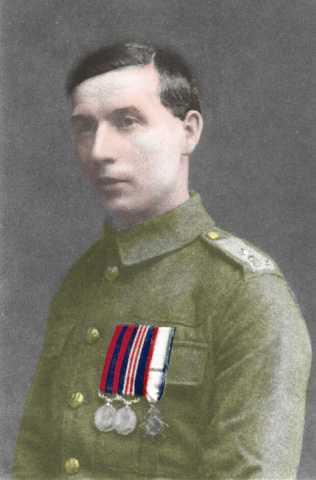
By October 1914 a further army corps of two more infantry divisions had been created and sent to join the BEF, together with three further cavalry brigades, allowing a cavalry corps of three divisions to be formed as well. As many of the troops were reservists, recalled from civilian life on the outbreak of war (men like Private Frank Richards, author of one of Old Soldiers Never Die), these forces represented most of the remaining available strength of the regular army in 1914.
Detesting school, Richards often played truant and left formal education as soon as he was able – in those days at the age of 12. He worked in a variety of jobs, starting as the door boy in a local colliery. Then, in April 1901, under the combined influence of his adopted brother and the news of the Boer War in South Africa, he joined the army, enlisting in the ranks of the Royal Welch Fusiliers.
Richards served in India and Burma, finally being discharged into the Reserve in 1912. When World War One broke out on 4 August 1914 he was working as a timberman in the mines around Blaina but was immediately called back to the colours. By 7 August he was en route to Dorchester and on 10 September (very soon after the battle of Mons ) he sailed for France with other members of the British Expeditionary Force. Incredibly, Richards a Royal Welch Fusilier saw action in most of the major British campaigns on the Western Front 1914 to 1918 without suffering too many injuries. In 1933 he published his memoir Old Soldiers Never Die, with the help of his CO, author Robert Graves. On the Western Front, he was awarded the Distinguished Conduct Medal and Military Medal while always resolutely refusing promotion from the lowest rank of Private.
More about Mons 23 August 1914.
|
|